
We’ve spent the past few weeks unpacking how motherhood in America has been shaped, not just by policy, but by the stories we tell about it.
Last Thursday, I shared the story of the “welfare queen” and how it reshaped who we blame when families struggle. Instead of asking why the system wasn’t working, we were taught to look at mothers themselves.
But that kind of story only works when the system’s failures are easy to ignore.
Then came a moment in 2020 when they weren’t — when everything broke at once.
When Mothers Became America’s Safety Net Overnight
In March 2020, as COVID-19 began spreading rapidly around the world, schools shut down across the US.
You probably remember exactly where you were when you heard the news. I do.
I was at home quarantined with my two-month-old baby, Sai, and older son, Shaan, trying to make sense of what was happening. At the same time, I was running Girls Who Code, navigating uncertainty not just for my family, but for an entire organization and the community we served.
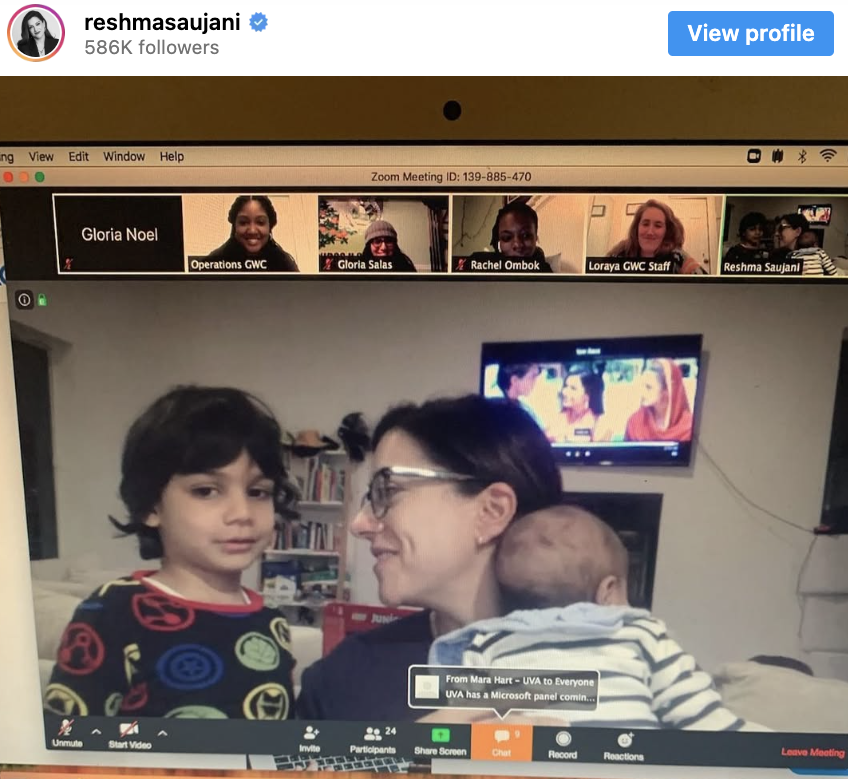
Around us, life was collapsing into a single space. Child care centers closed. Classrooms moved onto laptops. Kitchens became offices, schools, and daycares all at once.
And just like that, the infrastructure families relied on disappeared.
But work didn’t pause. Parenting didn’t pause. The demands simply stacked up, all within the same four walls.
And as we’ve seen happen over and over again, the burden didn’t spread evenly.
It concentrated. On mothers.
Mothers were expected to show up as employees while also stepping in as teachers, caregivers, and the operational backbone of their households. What looked, from the outside, like a temporary disruption was in reality something much more profound.
What the Pandemic Exposed
What the pandemic made visible is something that had been quietly true for decades: our systems function the way they do because mothers fill in where they fall short.
When child care is unavailable, mothers adjust.
When schools close, mothers step in.
When something breaks, mothers are expected to bridge the gap.
There is simply no alternative built into the system.
More than two million women left the workforce in 2020, during what economists coined the “shecession.” This mass exodus was caused by both women losing their jobs and resigning because of caretaking duties. Mothers spent an additional 173 hours of work without pay in 2020, while financial anxiety surged by more than 40%. The impact was not evenly distributed, though — single mothers, Black mothers, and those without college degrees were hit the hardest.
The pandemic not only created new pressures for mothers, it revealed how much they had already been carrying.
Six Years Later, We’re Still Living It
The pandemic may feel like a chapter we’ve closed, but for many mothers, its effects are still unfolding.
In early 2025, the labor force participation rate for mothers with young children dropped nearly three percentage points, reaching its lowest level in more than three years. Between January and August alone, more than 455,000 women exited the workforce, and most of those exits weren’t layoffs — they were women making the calculation that staying wasn’t sustainable. For too many, child care had quietly priced them out of their jobs.
At the same time, return-to-office mandates have surged, nearly doubling among large companies and removing the flexibility that had made work even partially manageable for many families.
The tension that defined the pandemic years hasn’t disappeared. It has returned in a more familiar form, where mothers are expected to work as if they aren’t caregivers, and caregive as if they don’t work.
Child care tells a similar story.
The fragility that was exposed during the pandemic was never fully addressed. When federal stabilization funding expired in 2023, billions of dollars were pulled out of the child care system that had been barely holding on as it was. Since then, costs have continued to rise, now increasing at roughly twice the pace of inflation, while supply has failed to keep up with demand.
Today, there is a national shortage of more than 4 million childcare slots, leaving roughly one in four children without access to care nearby.
So families continue to do what they’ve always done.
They patch together solutions. They make tradeoffs. And when there’s no viable option left, mothers step in once again to absorb the shortfall.
The Emotional Toll We’re Paying
Some of the most lasting effects of the pandemic aren’t economic or logistical — they’re emotional.
Today, 48% of parents report feeling completely overwhelmed, nearly double the rate of other adults. For many mothers, the acute stress of those early pandemic months has settled into something more constant, shaping how they move through their daily lives.
There’s a sustained level of burnout that hasn’t receded, a heightened awareness of risk, and a quiet but persistent exhaustion that comes from carrying so much, for so long, without relief.
Even the social fabric of motherhood has shifted. Friendships have thinned. Time feels more constrained. The capacity to extend beyond the essentials has narrowed.
While some families held onto positive changes— greater closeness, more intentional time together — those gains often exist alongside an ongoing sense that life hasn’t fully stabilized.
It’s being managed. Not rebuilt.
A Pattern That’s Hard to Ignore
Over the past few weeks, we’ve looked at different moments in history that when you step back, the pattern becomes hard to miss.
The creation of the “perfect mother” ideal.
The decision not to build a national child care system.
The narratives that taught us to blame mothers when the system failed.
And now, the moment when all of those pressures collided at once.
Each one introduced a new expectation without removing the old ones:
Stay home
Figure it out
Prove you’re deserving
Absorb the crisis
Layer by layer, those expectations accumulated into what defines modern motherhood today.
But here’s the shift: mothers are fed up with being the backup plan for a system that was never designed with them in mind. We’ve been the safety net for generations, quietly filling the gaps, holding everything together, making the impossible work.
And we’re done waiting for it to be fixed.
If the system isn’t working, it’s not on mothers to stretch any further.
It’s on the system to change. The era of mothers holding up a system that refuses to hold them is over.
Action Center

Host a Documentary Screening This June
As we wrap up Women’s History Month, I keep coming back to one thing: we shouldn’t need a designated month to examine the history of mothers.
Because these moments don’t stay in the past. They shape how we live, how we work, and how we see ourselves every single day.
And we need to continue telling the truth about them, so they don’t keep showing up in new forms.
That’s why we’re creating something bigger.
Our documentary about American motherhood premieres this June and it’s about bringing these stories into the light so we can change how society treats mothers.
Sign up to host a screening with other moms in your community this Summer.
Discover What History Class Didn’t Teach You About Moms
Moments like the pandemic don’t happen in isolation. They land on top of narratives that have been shaping how we understand motherhood for generations — stories that tell us this level of responsibility is normal, expected, even admirable.
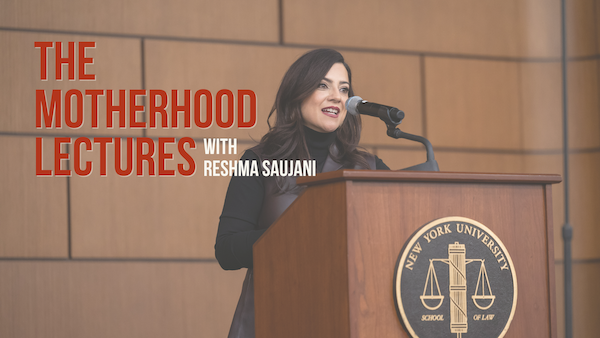
I’ve unpacked those narratives in The Motherhood Lectures, a series I delivered at NYU Law’s Birnbaum Women’s Leadership Center.
The response has been overwhelming. And because of that response, we’re already planning a part two. Follow us on You Tube, Instagram or LinkedIn so you can be the first to see it when it’s released.
American Motherhood Stories
Over the past few months, we’ve been asking moms a simple but powerful question: When did you realize that America was not built for mothers?
The response has been overwhelming. Our goal is to ensure these stories see the light they deserve because it’s only by sharing them that we shift the narrative around motherhood and change how our culture values mothers.
Each week, we’ll be featuring new stories here.
To the moms who have already trusted us with their stories — thank you. We hold them with care. And if you’ve lived this too, we’re inviting you to share your story and help make motherhood visible and valued in this country.
Share by the end of April to be included in the film credits of our upcoming documentary that premieres this June.
Making Headlines
Check out what people are saying about Moms First in the news:
- A bravery deficit is holding back today’s leaders (Big Think)
- 14% of families spend more on day care than housing. What’s the fix? (Straight Arrow News)
We’ve held this system together for generations — quietly filling the gaps, making the impossible work. But we were never meant to be the safety net. It’s time to stop stretching ourselves to hold it all, and start demanding a system that finally holds us.
Fighting for the country moms deserve,
Reshma Saujani