
Every April, we go through the same tax season ritual. We gather our W2s or 1099s, track down numbers from across the year, and try to translate our lives into something that fits neatly into boxes and lines.
It’s presented as a financial exercise, a matter of math and compliance, but if you step back for a moment, it’s doing something much bigger than that.
It’s defining what counts as work.
That’s the part we don’t really talk about. The tax code isn’t just a system for collecting revenue, it reflects a set of values. It tells us what kind of labor is worth measuring, what gets recognized, and ultimately what matters in our economy. And when you look at it through that lens, it becomes hard to ignore what’s missing.
Unpaid caregiving — the work that keeps families functioning and makes every other kind of work possible — often does not register at all.
We’ve built a system that revolves around wage-based labor. If there’s a paycheck attached, it counts. If there isn’t, it disappears.
And yet unpaid caregiving in the United States is valued at more than $1 trillion annually. That’s not a small oversight. That’s a massive, foundational part of the economy. The system depends on this labor, but it only works because that labor remains invisible. Ultimately, moms are giving it away for free.
You see this disconnect most clearly when you talk to stay-at-home moms. No one would describe what they do all day as “nothing.” It’s managing a thousand moving pieces, solving problems in real time, anticipating needs, and keeping everything running.
It is constant, skilled, and often exhausting work. But if you stay home to do it, the system records you as having no income, no earnings history, and no measurable contribution.
And even within households with both parents employed outside of the home, that labor is not evenly shared. Mothers still perform roughly twice as much unpaid caregiving as fathers.
The Long-Term Cost of Work
This invisibility doesn’t just exist in theory. It shows up in very real, long-term ways.
Social Security benefits are based on lifetime earnings, which means every year spent caregiving is treated as a year of zero. Over time, that compounds into a significant gap.
Women receive approximately 20% less in Social Security benefits than men, not because they contributed less to society, but because the system only recognizes one kind of contribution.
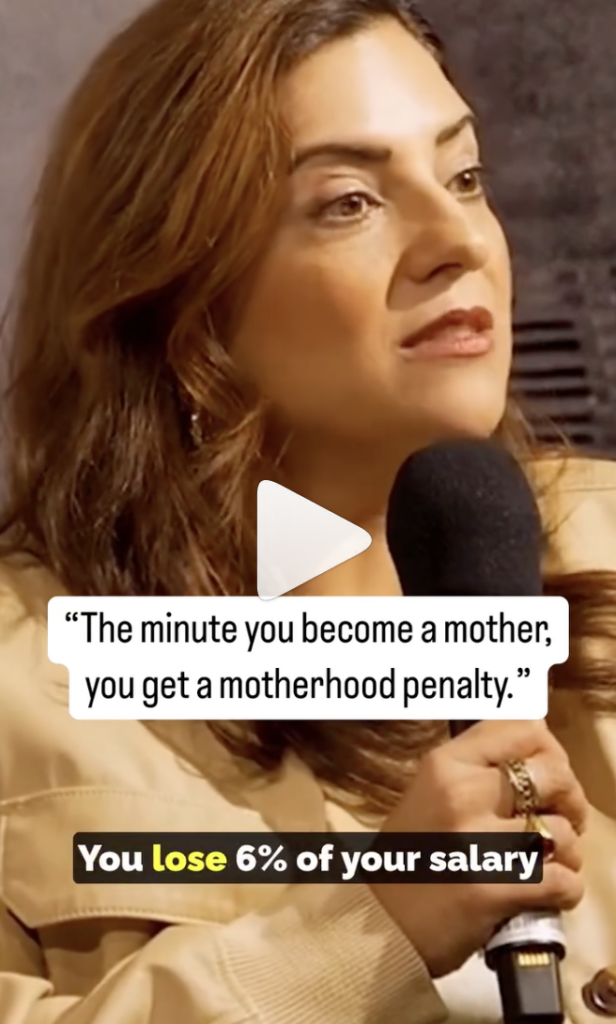
And staying in the workforce doesn’t solve the problem either. Mothers face a different version of the same dynamic. Women experience a wage penalty and lose between 4% and 7% of their income per child, while fathers often see their earnings increase after having children.
So the choice isn’t really a choice. Stay home, and your work is invisible. Stay in the workforce, and your work is undervalued.
Care Only Counts When You Pay for It
There’s another layer to this that’s hard to ignore once you see it.
Care only seems to count when you pay someone else to do it.
We offer tax credits for childcare, but only if that care is outsourced. The same labor, when performed unpaid within the home, doesn’t qualify for recognition in the same way. Meanwhile, childcare for one kid in this country can cost anywhere from $10,000 to $20,000 or more per year, depending on where you live.
So we’ve created a system where care becomes economically visible the moment money changes hands, but remains invisible when families (and usually, mothers) provide it themselves. Same work, same value — completely different treatment.
When you step back, the bigger truth is hard to ignore. The economy doesn’t function without care. Every worker, every company, every industry depends on someone doing the labor of raising and supporting the next generation.
Mothers are not outside the economy. They are subsidizing it, often without recognition, without compensation, and often at the expense of their own future, because those years of caregiving don’t count toward retirement benefits.
Why We Call It Love Instead of Labor
Part of the reason this persists is cultural. We’ve been taught to think of caregiving as instinct, as love, as something you’re supposed to do rather than something that should be counted. And of course it is those things. But it is also labor.
When we don’t name it as labor, we make it easier to exclude it from the systems that assign value. And when something isn’t counted, it isn’t valued.
Sure, people will tell you they ‘value’ it. A partner might say they appreciate it. Your kids absolutely feel it. But try putting ‘raising a family’ on a tax form or a Social Security record and see what happens. In the eyes of the system, it doesn’t register.
No income. No credit. No value.
This Isn’t Hard. We’re Just Not Doing It.
So what would it mean to build a system that actually reflects how families live and work today?
There are ideas out there that start to move in that direction: caregiving credits that count toward Social Security, policies that recognize time spent raising children as economically meaningful, systems that reflect the reality that work doesn’t only happen in an office or on a payroll.
And to be clear, this isn’t some abstract, pie-in-the-sky thinking. Many countries already do this. They’ve built systems that acknowledge caregiving as part of the economic engine, not something separate from it.
It’s the US that has chosen not to prioritize it. We’re one of the wealthiest countries in the world. We have the data. We have the policy expertise. We have the resources to fund just about anything we decide matters. And yet, when it comes to supporting the labor that makes all other labor possible, we suddenly act like it’s too complicated or too expensive.
None of this requires overhauling everything overnight. It requires deciding that this work is worth counting. It’s about closing the gap between what we know to be true and what our systems are willing to acknowledge.
And I, for one, am tired of filing this issue away. It’s time to make sure the unpaid work of mothers no longer shows up as zero.
Action Center

What You’re Owed (But Might Be Missing)
Doing your taxes as a parent shouldn’t feel this complicated. There are credits and deductions that can help but too many families don’t even know what they’re entitled to.
So we broke it down.
Check out our tax guide to see what you may be entitled to this season.
And if you’re navigating paid leave, use our PaidLeave.AI tool to find out what benefits and income you could qualify for.
New York Moms: Take Action for Fair Pay
Restaurant workers are primarily women — disproportionately women of color— and many are single mothers. Yet they can legally be paid a subminimum wage of just $2.13/hour, forcing them to rely on unpredictable tips to make ends meet. It’s a system that fuels financial instability and leaves workers vulnerable on the job.
Now, as NYC moves to make outdoor dining permanent, the city is poised to grant valuable public sidewalk permits to restaurants without requiring them to pay a full wage.
Sign the petition from One Fair Wage urging Mayor Mamdani to condition outdoor dining permits on a full minimum wage, with tips on top.
American Motherhood Stories
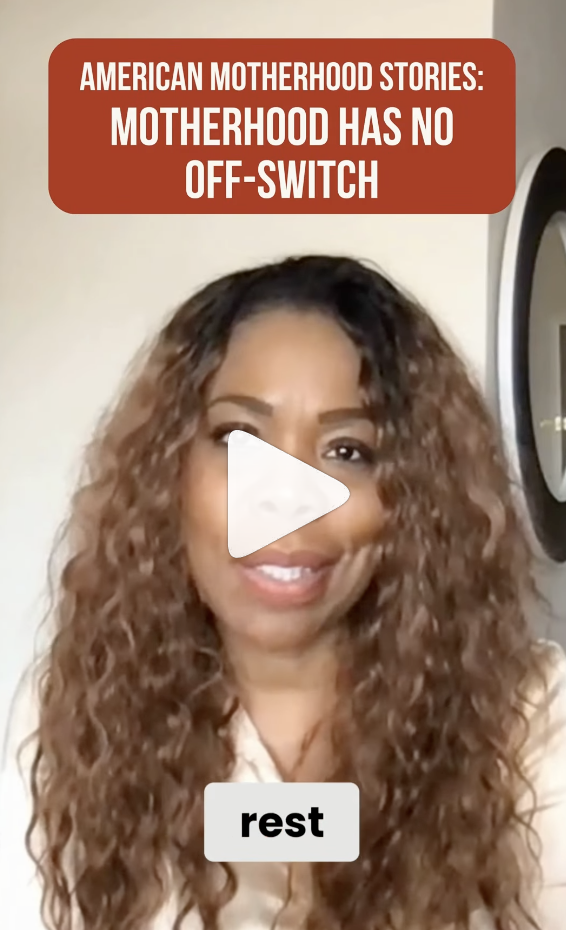
There’s no off switch for moms. We answer emails while holding our kids. We power through exhaustion. We tell ourselves we’ll rest later. And somehow, later never comes.
We’ve been told to “find balance.” But balance assumes you can set something down.
Motherhood doesn’t work like that.
So if you’re struggling, it’s not because you’re doing it wrong. It’s because the system was never designed to support you in the first place.
If this resonates, you’re not alone. And we’re done pretending this is sustainable.
We’re collecting stories from moms across the country. Share your story by April 30 and get your name added to the film credits of our upcoming documentary about American Motherhood that premiers this June.
In Case You Missed It

We’ve got some exciting news! My So-Called Midlife has been nominated for a Webby (again!).
It’s an honor for the podcast to be recognized, especially alongside voices we admire so much like Esther Perel. If you can spare a minute, we’d be grateful for your support.
We’ve spent long enough treating this work like it doesn’t count. It’s time we build a system that reflects what we already know to be true.
Because this work counts,
Reshma Saujani