
Something is breaking — and Black women are feeling it first.
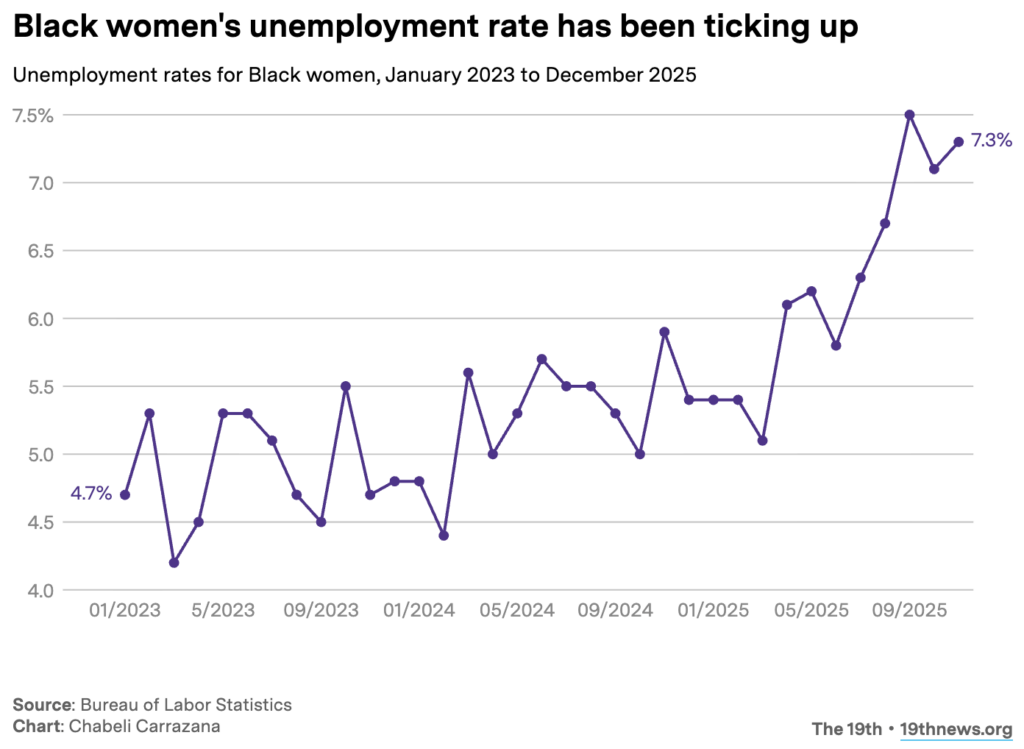
According to reporting out this week from The 19th, unemployment rates for Black women rose to 7.3% in 2025 — “a level comparable to white women’s unemployment during the worst moments of the Great Recession.”
But this latest spike in Black women’s unemployment didn’t emerge from a level playing field. For decades, Black women’s unemployment has tracked at roughly twice the rate of white women’s across economic booms and busts alike.
As CBS News recently reported, when labor markets tighten, employers don’t suddenly become more equitable; they become more selective. Hiring decisions lean more heavily on subjective judgments, informal networks, and perceived “fit.”
That’s when long-standing bias does its quiet work.
Which means the forces reshaping the labor market right now aren’t acting on a blank slate. When DEI programs are rolled back, when public-sector jobs are cut, when flexibility is revoked through rigid return-to-office mandates, those changes don’t land evenly. They land on top of an existing imbalance
What follows isn’t accidental. It’s structural. And it helps explain why Black women are being pushed out first as these policies take hold.
The Unraveling of DEI
Start with the collapse of DEI at work. Since the 2024 election, nearly one in five companies has reduced or eliminated DEI programs. These rollbacks are often framed as cost-cutting or political neutrality, but the impact is anything but neutral.
DEI initiatives weren’t abstract values statements. They functioned as guardrails. They helped surface bias in hiring and promotions. They created accountability during layoffs. And when those programs disappear, the workers most likely to be sidelined are the ones who were already navigating unequal terrain. That includes Black women.
The Erosion of Government Jobs
Then there’s the federal workforce. For decades, government jobs have provided a critical source of stability for Black women, offering predictable hours, benefits, and stronger protections against discrimination.
Black women are significantly more represented in public-sector employment than in the private sector, according to the U.S. Bureau of Labor Statistics, making government work a key pillar of economic security for many Black families.
But recent federal layoffs and hiring freezes have hit this sector hard. Labor data shows that more than 300,000 Black women left federal employment between February and April 2025 alone, wiping out roles that anchored household stability and widened existing inequities almost overnight.
Return-to-Office Mandates on the Rise
Layer on top of that the rapid return of rigid return-to-office mandates. Seventy percent of companies now have formal RTO policies requiring some in-office time. But remote and flexible work is not just a perk for many mothers; it’s the difference between staying employed and being forced out.
Black mothers are disproportionately likely to be the sole caregiver in their households. In 2023, nearly 47% of Black mothers were single mothers, compared with about 21% of all U.S. mothers overall. Single mothers rely on flexible schedules to manage child care, school pickups, sick days, and the invisible labor that keeps families afloat. As companies roll back flexibility and demand more in-person work, many mothers are left with an impossible choice: their job or their kids.
A Harder Labor Market Ahead
And now, economic pressure is tightening even further. Yesterday, the Federal Reserve announced its latest monetary policy decision, signaling continued restraint in the labor market and a slower path to job growth.
When the economy tightens, job losses are never evenly distributed. They cascade toward workers with the least margin for error and right now, that includes Black women.
The Damage Doesn’t Stop at a Paycheck
This is not just a workforce issue. It’s a potential public health crisis.
As The American Prospect has reported, unemployment among Black women is closely linked to increased stress, worsened maternal health outcomes, housing and food insecurity, and long-term impacts on children’s wellbeing.
Economic instability compounds already stark racial disparities in maternal health, where Black women face significantly higher risks of pregnancy-related complications and death. Job loss doesn’t just reduce income. It disrupts health care access, increases chronic stress, and destabilizes entire households.
Children feel this instability, too. Research consistently shows that economic uncertainty affects children’s mental health, academic outcomes, and long-term economic mobility. When a mother loses her job, the consequences ripple outward, through families, schools, and communities.
Treating Black women’s unemployment as a niche issue misses the point. This is a warning sign for all of us.
What Do We Do Next?
This is where power enters the conversation.
Because this isn’t just a problem for Black women. It’s a problem for the entire economy. When a group that represents roughly 7% of the workforce is pushed out of jobs at accelerating rates, that’s not a niche issue — it’s a drag on growth.
Fewer paychecks mean less spending, less stability, and less momentum. An economy that sidelines Black women isn’t just unjust. It’s weaker.
And here’s the part too many people underestimate: mothers aren’t just workers or caregivers — we are the economy. Full stop.
Women control or influence the majority of household spending in this country. That means we don’t have to wait for permission to be heard. When families change how they spend — when they pause purchases, redirect dollars, or walk away from brands — industries notice. Not because it’s moral. Because it’s measurable.
We’ve already seen what that looks like. When Target pulled back on its DEI commitments, customers responded. The backlash translated into brand erosion and billions in lost value. The message was clear: values don’t live in press releases, they live in purchasing decisions.
So this moment isn’t just about DEI. It’s about who this economy is designed to work for and who it’s willing to discard.
When Black women are supported, families are stronger. Communities are more stable. The economy grows. When they’re pushed out, the damage spreads — through households, through markets, and through growth itself.
The data is clear. And the leverage is real.
Which means we don’t shrug this off. We don’t accept these job losses as inevitable. We name what’s happening and who is being harmed first. We demand clarity from employers about equity. We push back on workplace policies that punish caregivers. And we spend with intention, supporting companies that invest in people, and withholding dollars from those that don’t.
Because this economy moves when moms do.
Action Center

- Live in Virginia? Help Win Paid Leave in Your State: Virginia has a chance of becoming the 14th state with paid leave, but lawmakers need to hear a wave of support from Virginials to get it over the finish line. Sign the petition now.
- The American Motherhood Lectures: Live in NYC on Feb. 12
Join Reshma Saujani for a taping of The American Motherhood Lectures — a powerful live exploration of the history, myths, and truths shaping motherhood in America and the movement to finally value caregiving as the essential public good it is. Register for the event.
In Case You Missed It
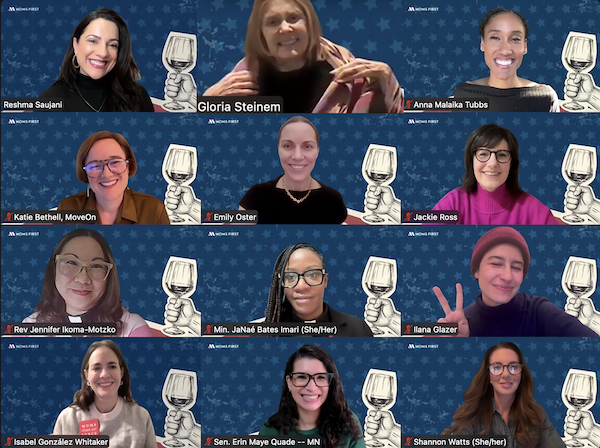
Watch Recording: Motherhood Live
Thousands of moms and allies showed up for our Motherhood Live event this past Monday to connect, speak truth, and remind the world that when moms come together, we are a force. Watch the recording to feel the power of that moment and see the amazing lineup of panelists.
An economy that pushes Black women out isn’t just unjust, it’s unsustainable. And we’re prepared to use every bit of influence we have to prove it.
Let’s shut it down,
Reshma Saujani