
What We Ask Women to Carry in Silence
Over the past few months, we’ve been collecting stories from moms across the country as part of our documentary on motherhood in America.
Hundreds of women wrote in.
They told us what motherhood has cost them. What it has required of them. What no one sees.
And again and again, one story kept surfacing: Pregnancies that ended in loss. Not as a footnote. Not as something they “got through.” As something that changed them.
That shouldn’t surprise us.
Because miscarriage is far more common than we treat it. About 10-20% of known pregnancies ends in miscarriage. When you include pregnancies that end before someone even knows they’re pregnant, the number is likely even higher.
That means millions of women in this country will experience pregnancy loss.
And yet, we’ve built almost no system to support them through it.

I know this because I’ve lived it.
I’ve had five miscarriages.
There’s a photo of me from a campaign fundraising event in 2012 — speaking on a stage just three days after my first miscarriage and being told by the doctor, “There’s no heartbeat.” I hadn’t even gotten the D&C procedure yet.
But I still showed up for work. I still smiled. I still persevered.
And that’s not unusual.
Because this is what we expect of women.
We expect them to swallow their grief and compartmentalize the pain. To keep working, keep parenting, keep performing. Even when their body is going through something physically and emotionally significant.
In the United States, there is no federal requirement for paid leave following miscarriage.
No standard. No baseline.
Most women are left to rely on a patchwork of options: a few sick days, PTO if they have it, or unpaid leave under the Family and Medical Leave Act (FMLA), which only covers about 60% of workers and offers no pay. In practice, that means millions of women are forced into impossible choices: go back to work before they’re physically or emotionally ready, lose income they may depend on, or risk their job altogether.
For something that affects roughly one in four pregnancies, that reality is staggering.
This Is Where It Gets Dangerous
The gaps don’t stop at the workplace. They extend into care itself.
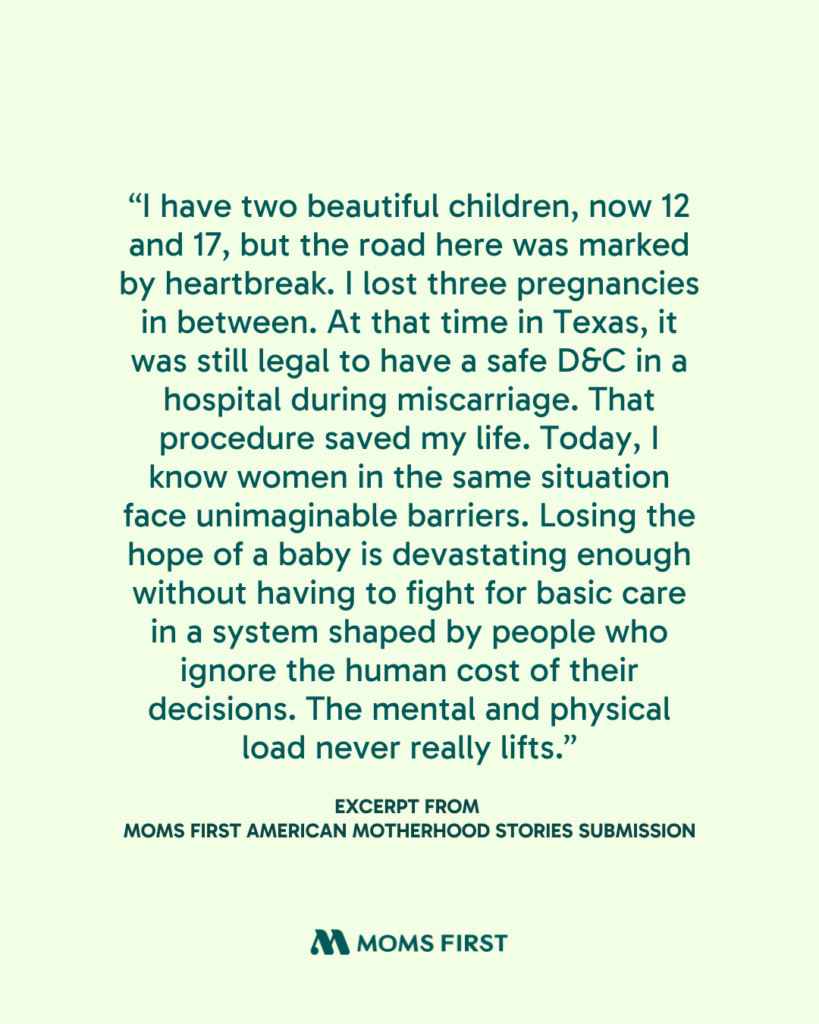
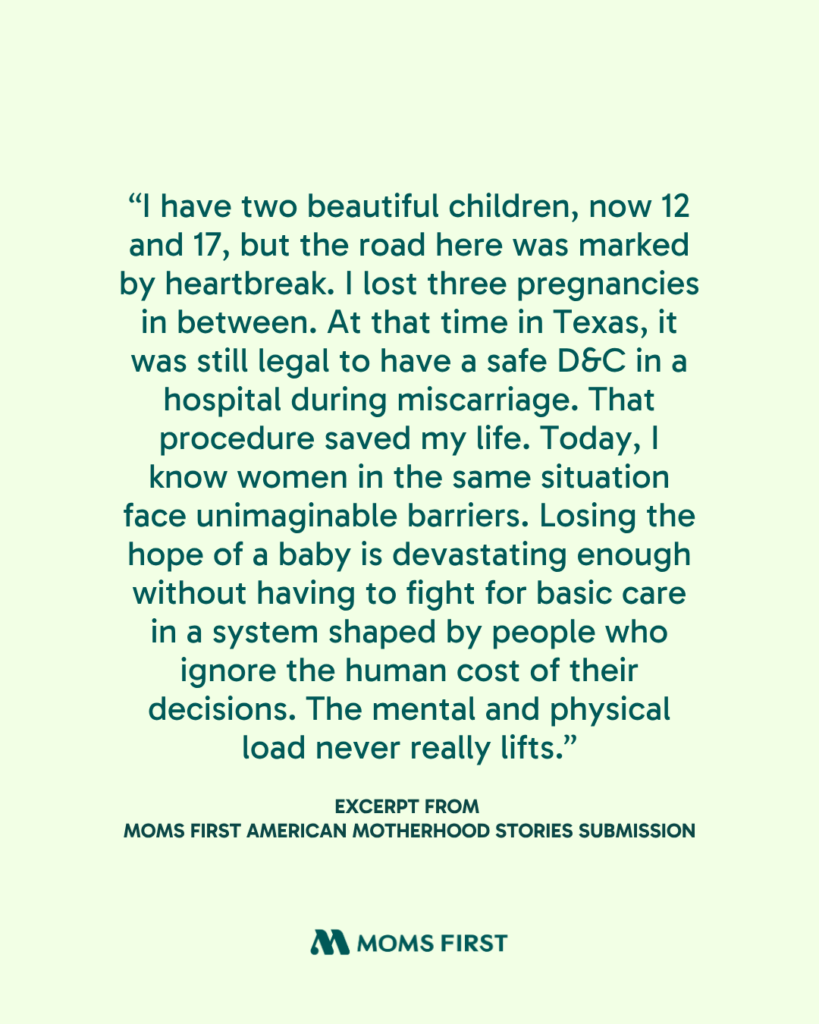
Because here’s the reality that too often gets lost in political debates: Miscarriage care is abortion care.
The same medications. The same procedures. So when abortion care is restricted, miscarriage care is impacted too.
And this isn’t hypothetical. We’re already seeing the consequences.
Since the fall of Roe v. Wade, more than a dozen states have enacted strict abortion bans. In those states, doctors are reporting delays in miscarriage care because they are unsure what the law allows. Studies have found that providers are waiting longer to intervene — sometimes until a patient’s condition becomes an emergency.
Women have been sent home while actively miscarrying, told to return only if their symptoms worsen.
In one study, more than half of OB-GYNs in states with restrictions said legal uncertainty has directly impacted the care they provide. That hesitation isn’t abstract — it means delayed treatment, increased complications, and unnecessary risk.
At the very moment women need care and compassion, they are encountering confusion, barriers, and fear.
We Know How to Do Better. We’re Just Not Doing It.
The frustrating part is we know how to do better. And in some places, we are.
A small but growing number of states have started to recognize that pregnancy loss requires time and recovery.
In California, employers are now required to provide up to five days of leave for reproductive loss. Illinois allows up to 10 days of leave for miscarriage, failed fertility treatments, or failed adoptions. Oregon includes pregnancy-related complications, including loss, in its paid leave program. And states like Maryland are beginning to expand bereavement policies to include reproductive loss.
At the federal level, the Pregnant Workers Fairness Act requires employers to provide reasonable accommodations for pregnancy-related conditions, including miscarriage.
Some companies are going further, too. Pinterest offers four weeks of paid leave for pregnancy loss. Goldman Sachs provides 20 days. Zillow and Mintz have formal policies recognizing pregnancy loss within bereavement leave.
These are real steps. Real acknowledgement. Proof that support is possible.
But sadly they are still the exception, not the norm.
The Reality Our Culture Still Refuses to Acknowledge
For something that affects millions of women every year, we have built almost no real support system — not in our workplaces, not in our policies, and increasingly, not even in our healthcare system. That has to change.
Women should not be expected to carry the pain and grief of pregnancy loss alone. They deserve care, time, protection, and a system that actually shows up for them.
Because this is already part of American motherhood. We just haven’t been willing to fully see it.
Action Center
If pregnancy loss is part of your story, you are not alone. And you shouldn’t have to navigate it without support.
Whether you’re looking for care, community, or ways to take action, here are resources to help you process, heal, and push for the support women deserve:
Pregnancy Loss Support & Advocacy
Explore trusted resources like March of Dimes, which offers support for pregnancy loss and information on advocating for stronger workplace protections and care.
Maternal Mental Health Support
Organizations like Postpartum Support International provide access to therapists, support groups, and resources to help navigate the emotional impact of pregnancy loss.
Understand Your Leave & Workplace Rights
Use tools like PaidLeave.AI to better understand what benefits, protections, and leave options may be available to you.
Share Your Story
Help us tell the full truth of American motherhood. Share your story (or record it through video or audio) as part of our documentary, because visibility is how we drive change.
Explore some of the stories on our website that have recently been shared by the moms in our community.
In Case You Missed It

Virginia Governor Abigail Spanberger signing the “Momnibus” legislative package into law on April 22, 2026
Big Win for Paid Family Leave in Virginia
Virginia’s legislature has officially finalized a new law guaranteeing up to 12 weeks of paid family and medical leave for welcoming a new baby, caring for a loved one, or addressing your own serious health needs.
This means millions of Virginians will now be able to show up for their families in the moments that matter most without having to choose between a paycheck and caregiving.
With this win, Virginia becomes the 14th state (plus D.C.) to pass paid family leave — momentum that’s building across the country.
Next up: Pennsylvania. Paid leave already passed the House there in March. Now it’s on the state Senate to get it over the finish line.
The Fertility Crisis (and What Everyone’s Getting Wrong)
In my latest Substack newsletter, Here’s the Thing, I took on the growing panic around falling birth rates and sat down with a leading demographer to separate fact from fear. What we found? Both sides are missing the point.
It’s a conversation that connects to today’s First Word. Whether we’re talking about pregnancy loss or the broader realities of motherhood, the throughline is the same: women are navigating it all without the support they need.
Credits Are Closing: 1 Week Left to Add Your Name
One week. That’s it.
Become an Associate Producer and have your name in the film by sharing your story, making a donation, or signing up to host a screening.
We’re also rolling out exclusive perks for Associate Producerss and screening hosts as part of our American Motherhood Tour this summer.
If you’ve been thinking about it — this is your moment.
Too many women have been carrying pregnancy loss quietly for far too long. You deserve support, you deserve care — and you deserve more than being told to just keep going.
With you in the hard moments,
Reshma Saujani