
Where You Give Birth in America Still Determines If You Survive It
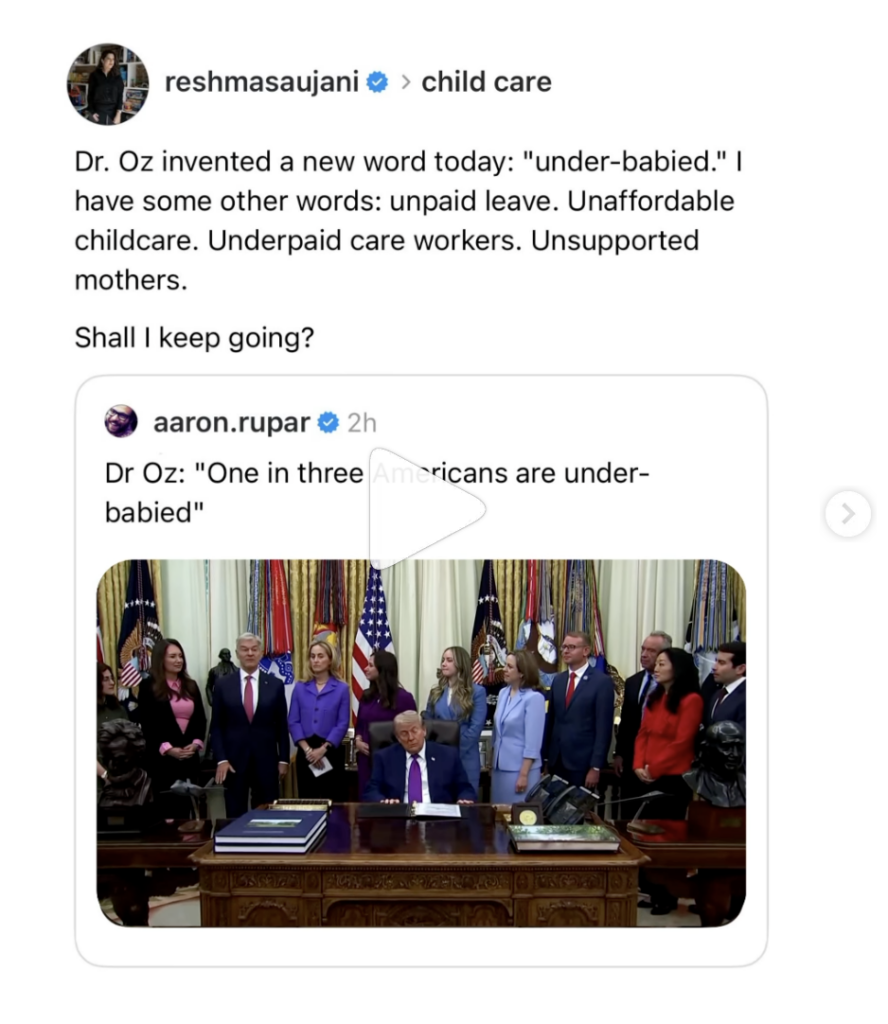
During a White House event this past Monday, Dr. Oz warned that America is “under-babied.”
Which is honestly a wild thing to say while entire parts of this country are losing maternity wards.
I keep thinking about the disconnect between the conversations happening in Washington and the reality women are actually living. Politicians are panicking about declining birth rates and wondering why Americans are not having more children. Meanwhile, across rural America and throughout the South, hospitals are shutting down labor and delivery units, OB-GYN shortages are worsening, and pregnant women are driving hours just to access basic care.
So before we start lecturing women about having more babies, maybe we should ask a more honest question: why have we made pregnancy and childbirth so unsupported in the first place?
Because where you give birth in America increasingly determines whether pregnancy is safe.
And mothers know it.
The Maternal Healthcare Map Is Collapsing
According to March of Dimes, more than 2.3 million women of childbearing age now live in maternity care deserts. Over one-third of counties in the United States lack adequate maternity care services, and every year more than 150,000 babies are born in counties without obstetric care.
Those statistics sound abstract until you picture what they actually mean. It means women driving 90 minutes for prenatal appointments. It means going into labor and realizing the nearest hospital that delivers babies is two counties away. It means rural moms piecing together care in communities where clinics has been disappearing for years.
And this crisis is getting worse because maternity wards are often among the first things hospitals cut when money gets tight.
Somewhere along the way, we decided maternity care was a business line instead of a public good. And mothers are paying the price for that decision.
That is the part that makes me crazy about the “under-babied” conversation. Women are not making decisions about motherhood in a vacuum. They are looking around and assessing whether this country actually feels safe and supportive for raising children.
And for a lot of women, the answer increasingly feels like no.
This Is Also a Race Story
This crisis hits Black mothers especially hard.
Black women in America are still three times more likely to die from pregnancy-related causes than white women, and those disparities persist regardless of income or education. That means this is not about personal responsibility or individual choices. It is about systems failing women over and over again.
And geography deepens the problem.
Many of the states with the worst maternal outcomes are concentrated in the South, where hospital closures, Medicaid gaps, provider shortages, and longstanding racial inequities overlap.
In Mississippi, large portions of the state lack obstetric services while infant mortality rates remain among the highest in the country. In Georgia, rural hospital closures have severely weakened maternal care access in many communities. Alabama and Louisiana continue facing chronic provider shortages alongside poor maternal outcomes and high poverty rates.
When people talk about maternal mortality in America, they often talk about it like it is some mysterious tragedy we can’t solve. But there is nothing mysterious about what happens when healthcare access disappears.
Women notice this. Mothers notice this.
They notice whether there is a hospital nearby. They notice whether postpartum care exists beyond a six-week checkup. They notice whether childcare costs more than rent. They notice whether paid leave is available or whether having a baby could financially wreck their family.
So when politicians act baffled about declining birth rates while maternity wards are disappearing and childcare costs more than college tuition, I honestly do not know what to tell them besides: women have eyes.
America Loves the Idea of Mothers More Than Supporting Them
That is the deeper contradiction underneath all of this.
America loves the symbolism of motherhood. Politicians love talking about families. Every campaign suddenly becomes about “protecting children” and “family values.”
Just look at the rollout of moms.gov this week. The administration launched an entire website supposedly dedicated to supporting mothers while women across the country are losing access to actual maternal healthcare. And honestly, that perfectly captures the problem. America keeps offering mothers messaging instead of material support. Propaganda instead of policy. A glossy website instead of hospitals, paid leave, affordable childcare, or postpartum care that extends beyond a six-week checkup.
When it comes to actual investment in mothers, the urgency disappears. For decades, we have allowed rural hospitals to collapse. We have treated postpartum care as optional. We have left maternal healthcare wildly uneven depending on what state you live in. And after Roe fell, the contradiction became even harder to ignore.
You cannot demand more births while making birth less safe.
That is not a pro-family agenda. It is political theater.
Mothers Do Not Need More Messaging. They Need Infrastructure.
To be clear, this is not hopeless. We actually know how to improve maternal outcomes when governments decide mothers are worth investing in.
Last week, reporting in The New York Times highlighted several practical solutions already being discussed to help stabilize maternal healthcare in rural America. Things like increasing Medicaid and insurance reimbursements so rural hospitals can actually afford to keep labor and delivery units open. Expanding federal support for obstetric training and emergency readiness in rural hospitals. Cutting red tape for midwives and birthing centers in maternity care deserts. Improving reimbursement for doulas and postpartum care.
This is not some impossible puzzle we have yet to solve.
California significantly reduced maternal deaths through standardized emergency protocols and maternal quality review systems focused on complications like hemorrhage and preeclampsia.
Several states, including Illinois, Colorado, and New Jersey, now extend postpartum Medicaid coverage from 60 days to a full year after birth, which matters enormously because many maternal deaths happen after delivery, not during it.
States like New York are also expanding Medicaid coverage for doulas and community-based maternal care programs, particularly in underserved communities.
The solutions exist. The question is whether we are willing to treat maternal healthcare like actual infrastructure instead of an afterthought.
Because mothers do not need another lecture about birth rates.
They need hospitals within driving distance.
They need postpartum support.
They need affordable childcare.
They need leaders who care as much about women surviving childbirth as they do about whether women are having children at all.
And until that happens, politicians should stop acting confused about why so many women feel unsupported, exhausted, and deeply skeptical when America starts demanding more babies.
In Case You Missed It
This Is What Movement Building Looks Like
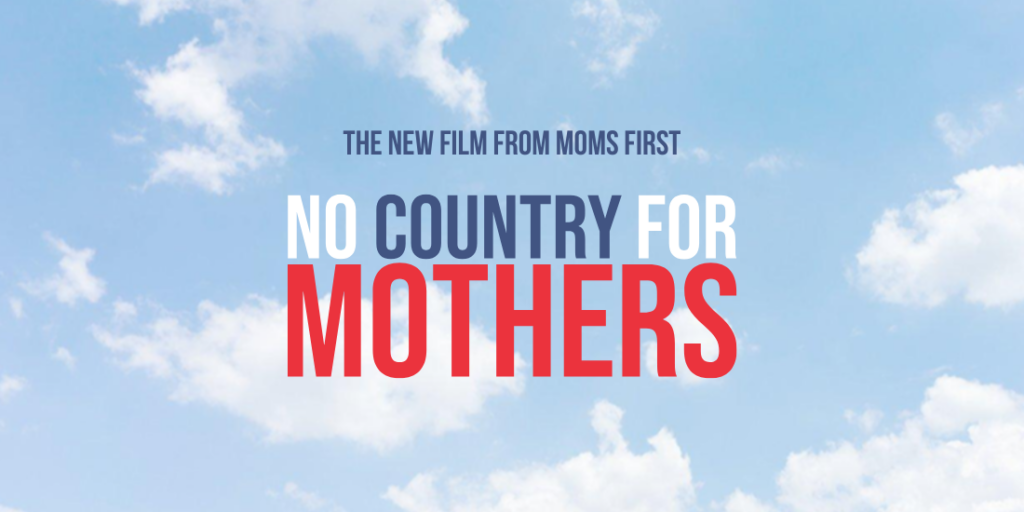
Last week, we officially released the trailer for our documentary, No Country for Mothers, and in classic mom fashion, you all immediately got to work. We already have 100+ screenings scheduled across the country — from hosting intimate gatherings at home to full theater rentals and auditorium events.
Because this is what moms do. We gather. We tell the truth. We share our stories. And we help each other realize that so many of the struggles we carry in motherhood are not individual failures for us to quietly figure out alone — they are systemic problems created by a country that has failed to build the infrastructure families actually need to thrive.
Want to see if there’s a public screening happening near you? Check the nationwide screening schedule. And if there isn’t one on the schedule yet, put one on it.
Visit our Host Hub for everything you need to get started, or join our upcoming office hour on June 25 and we’ll walk you through it. You can always reach out with questions at hello@momsfirst.us.
Making Headlines
Check out what people are saying about Moms First in the news:
- ‘No Country for Mothers’: New film rethinks support for American moms (Morning Joe)
- Moms First’s CEO: It’s time to finish the fight for paid leave, affordable childcare (ABC News)
We deserve a country where motherhood is supported not just celebrated in speeches. And until we build that, I’m going to keep saying the quiet part out loud.
With you,
Reshma Saujani