
Help build a country that works for mothers
Yesterday, TIME published my latest op-ed.
Some pieces I write because I have an argument to make. This one I wrote because I couldn’t sleep.
Like a lot of you, I’ve been following the news out of Cornell. And like a lot of moms I know, I’ve been asking myself questions that make me worry. What would my boys do if they received text messages like that? Can I prepare them enough?
I’ve been talking about bravery for more than a decade. I gave a TEDTalk. I wrote a book. Both were aimed at girls. I stand by both of them now more than ever. But, the Cornell case reminds me that we need to talk about our boys, too.
This piece is for every parent raising a son in a world we can’t fully control. It’s also for anyone who once watched something happen, said nothing, and still thinks about it years later. I suspect that’s most of us.
It was a hard one to write. I hope it starts a conversation at your dinner table.
Read the full piece on TIME’s website or right below.
What the Cornell 7 Case Reveals About Consent and Bravery
By Reshma Saujani
By now, most parents have likely read an article or two about the alleged assault involving a young woman and seven young men that took place at a fraternity on the Cornell campus in 2024.
Since the story broke, I’ve heard a lot of people ask, “How could this have happened?” I’ve also seen the national conversation focus almost entirely on consent education as the answer. Are we teaching consent early enough? Are we teaching it right?
Frankly, I think that’s an incomplete conversation.
Most parents I know have had the consent talk with their sons. I hear age-appropriate versions of it on the playground. Schools teach it. They should.
The issue is, in 2026, any man who commits sexual assault almost certainly knows what consent means and has simply decided it doesn’t apply to him.
Our sons know about consent. The real question is: Do they know how to be brave? Knowing about consent is one thing—living by it is another.
Much of our collective outrage about this horrific case has been focused on the “Cornell 7,” but I lay awake at night thinking about the more than 50 other young men in that fraternity group chat. They received a message inviting them to join the assault, followed by replies that grew more depraved as the night went on.
We don’t know what each of them saw or did, or why it took hours for anyone to step in. Some legal experts say those members who didn’t can’t be charged with a crime, because they had no legal duty to intervene.
I trust in my heart that my sons would never be one of the seven boys in that bedroom. Most boy moms share my confidence. I’m terrified to admit that I cannot control whether they will ever receive messages like the ones that appeared in that group chat. Moms dedicated to raising boys to be good men share my fear. But we cannot shield them from the culture around them. And I simply don’t think we have done enough to address that culture.
Years ago, I gave a TED talk arguing that we raise our boys to be brave and our girls to be perfect. I wrote a book urging girls to take more risks. I assumed boys had bravery covered. “They’re good,” I’d say to myself.
Turns out we were teaching them the wrong kind of bravery.
Too often, we tell young boys that courage means physical risk: run faster, jump further, climb higher. The manosphere sells an even more dangerous version: that strength means brute force and a real man answers to no one. Neither of these stories leaves boys with a script for the moment when the hardest thing to do is use their voice.
Bravery doesn’t always feel good. Bravery is saying the thing that will cost a friendship. It can feel like rejection. It sometimes sounds like tattling. There’s no dramatic music. Nobody claps. You may even question if the right thing to do was the wrong choice.
The masculinity crisis is real. And it’s a crisis of courage that we helped create. We spent years teaching young men what not to do, and almost no time teaching them what to do when someone else is doing it.
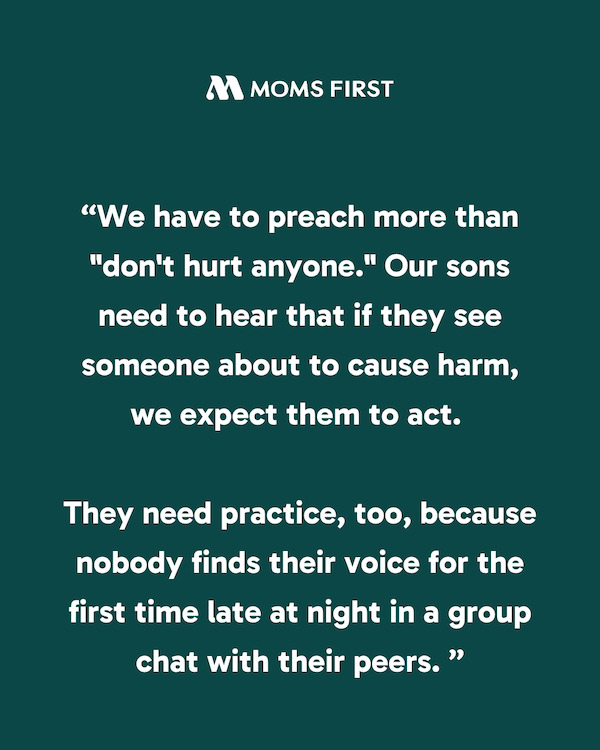
We have to preach more than “don’t hurt anyone.” Our sons need to hear that if they see someone about to cause harm, we expect them to act. They need practice, too, because nobody finds their voice for the first time late at night in a group chat with their peers.
So practice at the dinner table. Ask your son what he would type in that chat, and who he would call. Tell him you know he is capable of being brave. Tell him you would rather he lose his friends than his character.
If we want them to learn bravery, we have to be brave, too.
If you are a mom and a survivor of sexual assault and feel ready to share your story, consider telling your sons, as well as your daughters. For generations, these conversations have focused on teaching girls what not to do. Our boys need to hear their mothers’ stories, too.
Dads, you also have stories to share. Tell your sons about the time you laughed along at something you knew was wrong, or stayed quiet when a friend crossed a line. Tell them how it felt and what you wish you’d done.
We can show them that bravery doesn’t always feel good and speaking up can be hard, but both feel better than regret.
Student journalists at The Cornell Daily Sun, including a senior named Cereese Qusba who spent 23 months on her investigation, showed us what this looks like. They kept asking hard questions of their own university, knowing that the right path was the hard path. I want our boys to grow up knowing that’s usually the case.
Somewhere, a boy is about to read a message that turns his stomach. I want him to be brave enough to do more than turn his screen off.

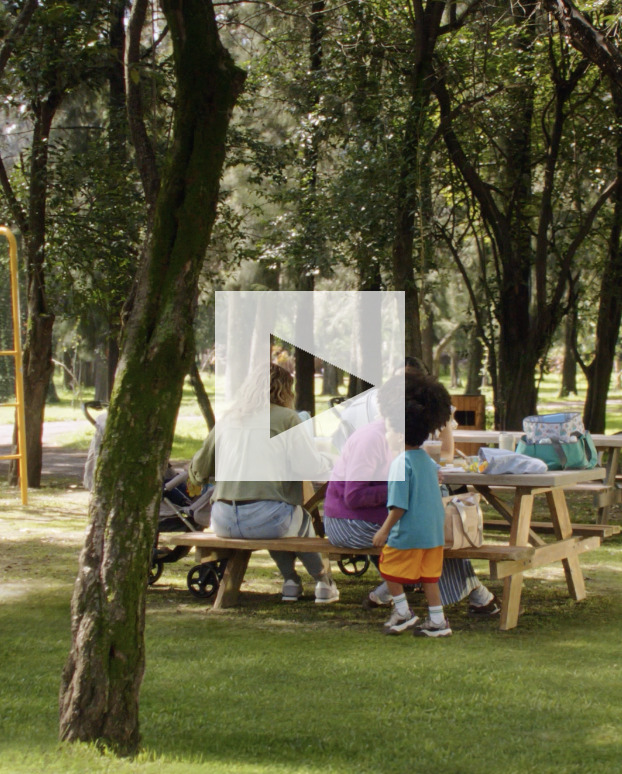
October 10 Is World Mental Health Day
Moms are held to an impossible standard, and the fear of looking like a “bad mother” keeps so many of us from admitting when we’re not okay. And a lot of us aren’t okay. At least 1 in 5 moms experience postpartum depression or anxiety, and most go untreated.
We love Ad Council’s new PSA series “What’s Her Secret?” because it’s breaking that silence. Share it with a mom who needs to hear it this World Mental Health Day and every day.

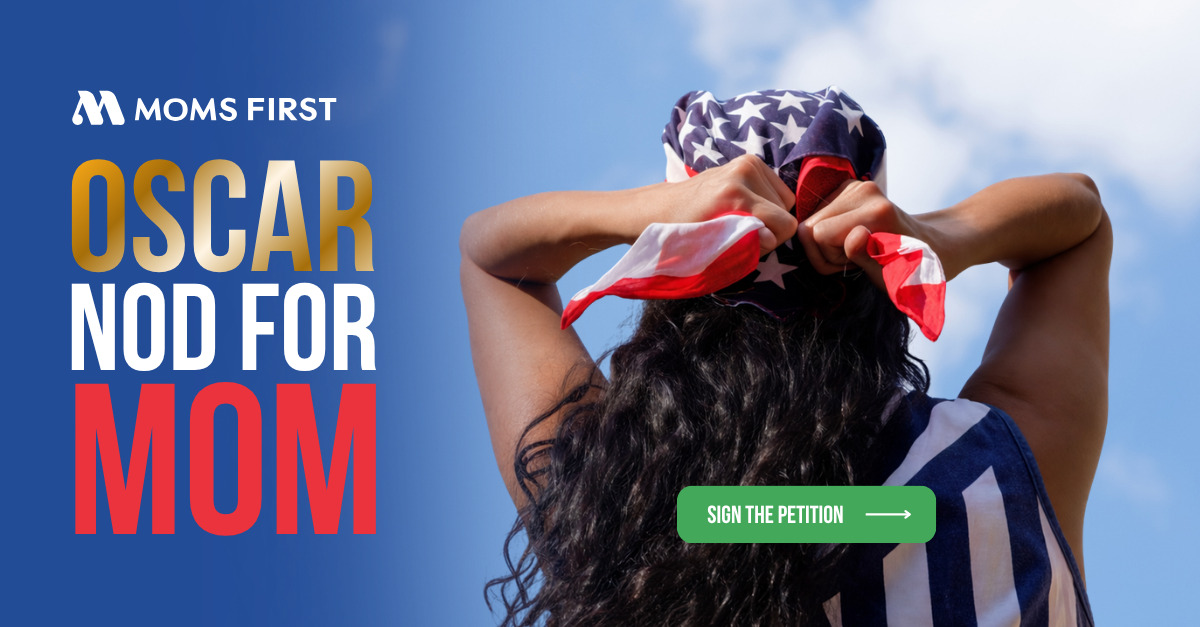
Last Chance: Add Your Name Before We Submit Our Application for Oscar Consideration
Next Thursday, October 15, we submit No Country for Mothers for Oscar consideration. Before we do, we want the Academy to see how many people believe real moms deserve to be the story, not just a line in someone else’s thank-you speech.
If you haven’t signed our petition yet, now’s the time. Sign the petition before October 15.
Thinking About Hosting a Screening?
Join Us on October 9 for a Virtual Office Hour
Contemplating hosting a No Country for Mothers screening, or already have one on the calendar? Pop into our virtual office hour on October 9, 12-12:30 PM ET. It’s casual, there’s no prep required, and you’ll walk away with answers to your questions, a few tips from our team, and everything you need to bring your community together.
No Country for Mothers: Screenings Happening Near You
Check for a local screening in your city or join a virtual watch party.
- Wilmington, DE, Oct 9, 8-10 PM at Theatre N — RSVP
- Haddon Township, NJ, Oct 10, 1:30-3:30 PM at William G. Rohrer Memorial Library — RSVP
- Los Angeles, CA, Oct 10, 5-7 PM — RSVP
- Rosemount, MN, Oct 12, 6-8 PM at The Meeting Point — RSVP
- Gorham, ME, Oct 13, 6-8 PM at Baxter Memorial Library — RSVP
- Des Plaines, IL, Oct 13, 5:30-8 PM at Le Village Cowork Des Plaines — RSVP
- Charleston, SC, Oct 14, 5:45-8 PM at The Charleston Museum — RSVP
- Batavia, NY, Oct 14, 5:45-7:30 PM at RRH Healthy Living Campus — RSVP
- Dallas, TX, Oct 14, 5-7 PM at Angelika Film Center & Café— RSVP
- Lake Geneva, WI, Oct 14, 6-8 PM at First Congregational United Church of Christ — RSVP
- Virtual Watch Party (NY), Oct 14, 8:30-10:30 PM — RSVP
- Williamsburg, VA, Oct 15, 6-8 PM at James City County Library — RSVP
- Cleveland, OH, Oct 15, 6-8 PM at CWRU Wade Park Community Engagement Center — RSVP
- Webster Groves, MO, Oct 15, 6-9 PM at Peace Community Building — RSVP
- Laramie, WY, Oct 15, 6-8 PM at Albany County Public Library – Laramie — RSVP
Want to host your own? Head to our Host Hub for all the info you need to set up your event.
We can’t control what shows up on our sons’ phones, but we can make sure they know what to do when it does. Ask your son what he would say if a friend sent something that crossed a line. His answer will tell you a lot, and the conversation itself might be the practice he needs.
Bravely,
