
Let me guess: you have at least one friend who’s exhausted, and it’s not because she’s parenting a toddler. It’s because she’s parenting a grown man.
You know the dynamic. She’s managing the emotional labor, keeping track of schedules, remembering birthdays and school forms, making the doctor’s appointments, and quietly holding everything together.
And at some point, usually over a glass of wine or a text thread that starts with “I can’t do this anymore”, she says something that lands harder than she expects: “This would actually be easier if I were on my own.”
And the truth is, she might be right.
In the weeks leading up to Valentine’s Day, we’re surrounded by messages about love, partnership, and finding “your person.” But beneath the roses and heart emojis, a more honest story is emerging. And it’s not just in our group chats, but in the data.
Why Waiting for “The Right Partner” No Longer Makes Sense
Nearly 40% of babies in the U.S. are now born to unmarried mothers, and a growing number of women are choosing motherhood without a partner — intentionally, thoughtfully, and without apology. Not because they’ve given up on love, but because the math of modern relationships often doesn’t work in their favor.
Women today are more educated, more financially independent, and clearer about what they want than any generation before them. For the first time in history, women are earning more college and graduate degrees than men — receiving 57% of bachelor’s degrees, 61% of master’s degrees, and 53% of doctoral degrees. They also make up nearly half of the U.S. labor force, and among Millennials and Gen Z, women’s participation is nearly on par with men’s.
Taken together, these numbers tell a clear story. Women have more economic agency, ambition, and confidence in their own footing than ever before but they’re exercising that agency in a system that still pushes moms, especially moms of young children and Black women, out of the workforce.
And that shift has changed how they think about partnership and family.
They’re far less willing to build their lives around relationships that ask them to settle or shrink, especially when many still find themselves carrying uneven emotional labor, navigating outdated expectations, and absorbing the professional, mental, and personal costs of partnership.
So a lot of women are doing a quiet, practical calculation: Do I really want to raise a child and a partner? Or just a child?
That question isn’t cynical. It’s rational.
Walking Away From Dating, Not From Motherhood
Dating apps are losing users, especially women, with recent data showing declines in daily active users across major platforms like Tinder and Bumble.
More women are choosing to remain single — not because they’re closed off to connection, but because they’re exhausted by managing, fixing, and carrying relationships that don’t feel like real partnerships.
What stands out most isn’t women stepping away from marriage — it’s women leaning into motherhood.They still want to be moms. They still want families and the experience of raising the next generation. What’s changed is that they’re no longer willing to put their lives on hold while waiting for a relationship that may never meet them where they are.
Instead, many women are finding other ways forward: choosing single motherhood by choice, pursuing IVF without a partner, using donor conception, and even building platonic co-parenting arrangements rooted in shared values rather than romance. These aren’t last-ditch decisions. They’re intentional ones, made by women who are clear about what they want and what they’re no longer willing to accept.
Culturally, though, we haven’t caught up.
The Problem Isn’t Single Motherhood. It’s the Systems Around It.
We still talk about single motherhood as a failure state — a struggle to be endured or a cautionary tale to avoid — even as the profile of single moms is changing in real time. Today’s single mothers are often older, more financially stable, and deeply intentional about the families they’re building.
At the same time, we cling to the myth that kids are automatically better off in two-parent households. But child development research shows that children’s well-being depends more on stability and low-conflict caregiving than on whether they live in a one- or two-parent household.
Kids learn what love looks like by watching it, and growing up in a home filled with resentment, imbalance, or constant tension doesn’t become healthy simply because two adults are present. Sometimes the healthiest thing a woman can model for her child is self-respect.
This is where Moms First comes in. While women’s choices are evolving, our systems remain stuck in the past. Our policies assume a second parent. Our workplaces assume a backup caregiver. Our child care system assumes two incomes and unlimited flexibility.
Single mothers — including those who arrive at motherhood by choice, with planning and resources — are still navigating systems that make parenting harder without a partner. That isn’t a personal shortcoming. It’s a policy failure.
Supporting families shouldn’t depend on whether someone found the “right” partner at the “right” time. Families deserve support because caregiving is essential. And if nearly half of births are happening outside of marriage, then family policy built around marriage isn’t just outdated, it’s irresponsible.
So, as we approach February 14th, I’m less interested in asking whether women still believe in love. I’m more interested in whether we’re willing to build a society that supports the families women are already creating — without judgment, outdated assumptions, or forcing anyone to choose between motherhood and autonomy.
Women aren’t rejecting family. They’re rejecting imbalance. And honestly, that feels like progress.
Action Center

Call Me Maybe
Every day, we’re moved by the stories moms are trusting us with as we produce our documentary about motherhood in America. The stories are honest, raw, and vulnerable. They’ve made us cry, laugh, and sometimes pause before coming back because of how heavy they are.
We’re honored to hold them, because when these stories stay hidden, moms are left thinking they’re alone. But in reality, it’s not them, it’s the broken infrastructure in this country.
We know moms are busy, and not everyone has time to write a story or wants to be on camera. So we’re offering a simpler way to share: leave us a voicemail.
Moms who include their first and last name and email will be added as Associate Producers on the film, premiering this spring.
One more thing: our production partner, Culture House, is also looking for home videos of moms with their kids. Honest, unfiltered moments of moms just being moms. If that’s something you’re open to sharing, submit your video.
In Case You Missed It
One Bad Mother
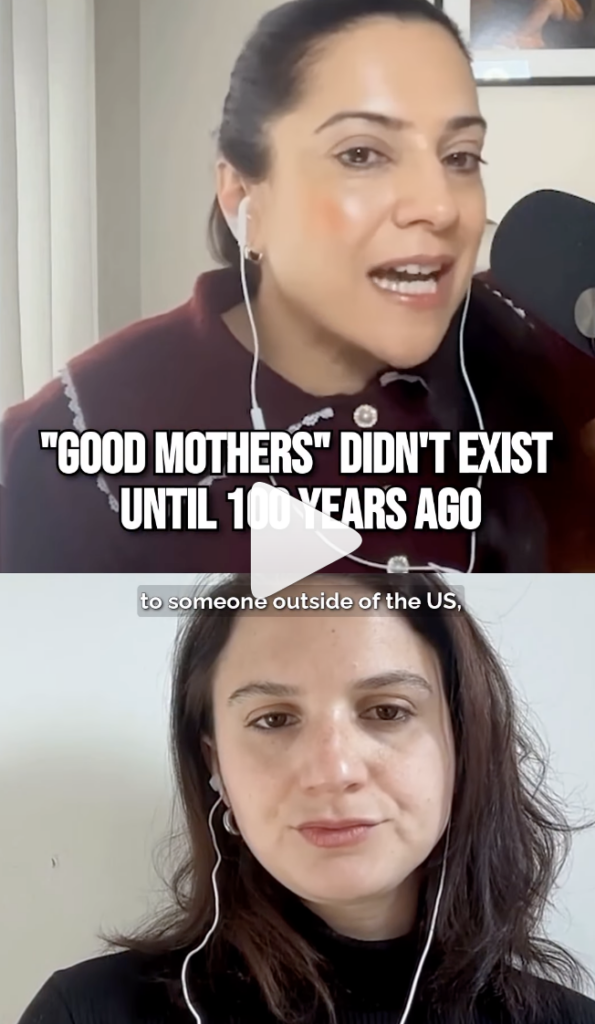
I had the privilege of sitting down with journalist and cultural critic, Ej Dickson, to talk about the idea of the “good mother” as a surprisingly recent invention.
Ej joined me on My So-Called Midlife podcast this week to dive into her new book, One Bad Mother: In Praise of Psycho Housewives, Stage Parents, Momfluencers, and Other Women We Love to Hate (out Feb. 10).
Next week, as Valentine’s Day fills our feeds with one version of love, I keep coming back to another. The kind of love that looks like choosing yourself without apology. The kind that looks like building a family in the way that makes sense for your life — not the way tradition tells you it should. And the kind that looks like demanding systems that actually support the families we’re already creating.
Love is being rewritten in real time by women who refuse to shrink, wait, or disappear to make other people comfortable. And if we’re willing to listen — really listen — it’s pointing us toward something better.
Love on our terms,
Reshma Saujani